
Clean Books in 2026: Why the Old “Sort It Out Later” Habit Is Finally Catching Up with Businesses
There is a habit that has been around for a very long time in Indian businesses. Sometimes an entry is a little off. A number does not quite add up. A transaction gets missed somewhere. What do most accountants and business owners do? They say leave it for. Fix it month. Sort it out before the filing. It will be fine.
For years this worked. Not because it was an idea but because the system was slow and had a lot of work to do. So small mistakes rarely caused any problems. Reviews took a time. The staff at the tax department were very busy. By the time anyone looked closely at anything the problem had usually been buried under months of entries and nobody noticed.
That comfortable situation is gone in 2026.
The financial compliance landscape in India has changed a lot. Data from banks GST portals, income tax filings, MCA records and TDS reports is now. Always talking to each other. There is no delay. When something does not line up across these systems, a flag goes up automatically. It goes up fast.
For business owners, freelancers and accountants who are still doing things the way this is the year they will face problems. Fixing things later is not just risky anymore. It can cost them money.
Why the Fix It Later Approach Stopped Working
To understand why things are different now it helps to think about what made the old approach possible.
The old system depended entirely on people reviewing things manually. Someone at the department had to look at a filing compare it to data notice the mistake and then decide whether to follow up. Given the volume of filings and the limited number of people doing that work most small mistakes never got looked at.
What has replaced that is something different. Automated systems now cross reference filings against data from sources at the same time. The process that used to take months now happens without any human needing to start it.
What Actually Means for Businesses Right Now:
Banks and GST portals report transactions automatically and any mismatch gets flagged the moment it appears in the system
Data from MCA filings GST returns, AIS records and income tax data is being compared all the time without anyone needing to initiate that comparison
AI tools scan thousands of returns looking for patterns and unusual transactions that would have gone unnoticed under the manual system
Refunds are now directly tied to reconciled data which means a discrepancy does not just create a notice it can block money Indian businesses are waiting on
The safety net that used to exist for errors and delayed corrections has been removed. There is no window anymore where things can be quietly fixed before anyone notices. The system notices first.
The Accounting Habits That Are Getting Businesses into Trouble
Most of the problems showing up in 2026 are not coming from businesses that are doing something wrong on purpose. They are coming from businesses that are still running on accounting habits that worked fine five years ago but are dangerous now.
The habits that are causing the problems right now include things like:
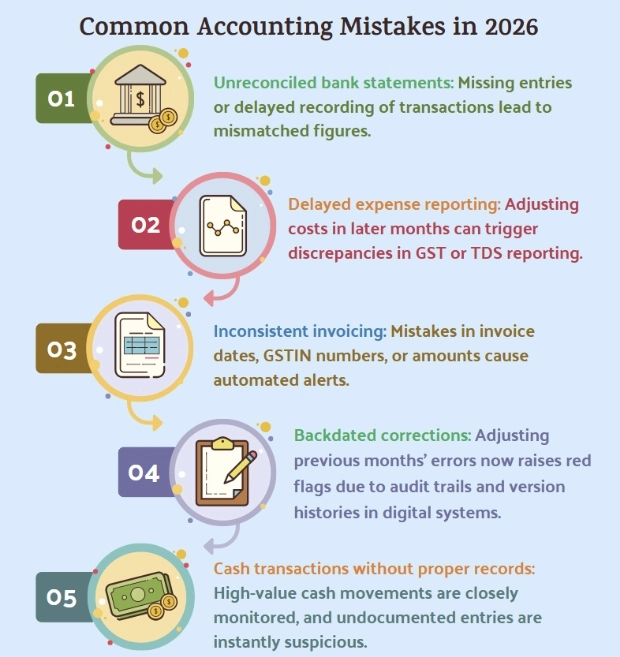
- Recording transactions in bulk at the end of the month instead of as they happen which creates timing mismatches the system flags immediately
- Making backdated entries to correct old mistakes without proper documentation, which the system can see clearly, and which often makes the situation worse
- Relying on agreements or informal records for expenses and then scrambling to create paper trails later when an audit comes up
- Letting GST reconciliation slide for a quarter and then trying to catch up in a rush before filing, which always introduces new errors
- Not tracking whether vendors are filing their own GST returns properly which affects input tax credit claims in ways that hit the Indian business directly
None of these habits feel seriously wrong when Indian businesses are doing them. They feel like shortcuts that everyone uses. In a system that is watching in real time and comparing data across multiple sources they show up as inconsistencies that trigger notices and audits.
If your business is guilty of these habits, 2026 is the year to stop relying on post-factum adjustments.
How Digital Audits Actually Work Now
The word audit used to mean something. Someone from the department would show up. Send a notice and then go through records in detail. It was a human-led process that took time to get started and gave Indian businesses some warning.
That is not really how it works anymore. Here is what the audit process actually looks like in 2026:
- Automated tools scan returns constantly looking for patterns, anomalies and figures that do not line up with what the system knows from sources
- Income figures reported in GST returns get compared automatically against bank statements MCA filings and TDS data
- Every transaction and every change to the books is digitally recorded with a timestamp
- AI tools calculate a risk score for each business based on its past compliance history how its numbers compare to others in the same industry and whether its transaction patterns look unusual
The message that comes out of all of this is uncomfortable for anyone still relying on adjustments after the fact. In 2026, Indian businesses need to have books from the start. Cleaning them up later is harder more visible and more likely to cause problems.
What Actually Happens When Books Are Messy
A lot of business owners think of bookkeeping errors as a minor administrative inconvenience. Something that can be sorted out with a bit of paperwork and maybe a small fine. In 2026 that is not a picture of what the consequences look like.
What Indian Businesses with Books are Dealing With Now:
Penalties that used to require a human to notice and decide are now automated
Tax refunds that the Indian business was counting on get blocked when data does not match across platforms
Indian businesses that have shown repeated discrepancies in their filings get flagged for comprehensive audits more automatically
Banks, investors and business partners are increasingly looking at records as part of due diligence persistent errors and inconsistencies hurt credibility
Correcting mistakes after the fact in a system with digital traceability is significantly more complicated and time consuming than it used to be
The financial cost of messy books in 2026 is real and it goes well beyond whatever penalty gets attached to a specific filing error.
What Keeping Clean Books Actually Looks Like in Practice
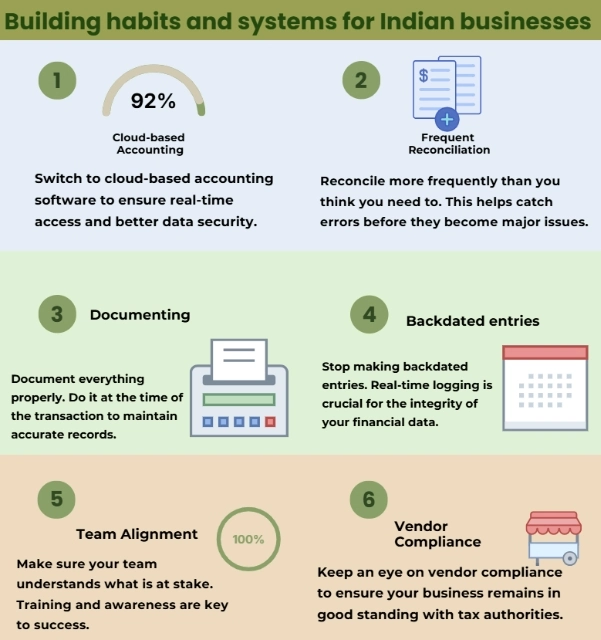
Getting this right does not require an overhaul of how the Indian business operates. It requires building a few habits and making sure the right systems are in place to support them. Here is what Indian businesses that are managing this well are doing:
The Tools That Make This Manageable
Nobody is expected to do all of this. The tools that are genuinely useful for staying compliant in 2026 include:
Accounting software that automates invoicing, reconciliation and real time reporting so the administrative burden is significantly reduced
GST reconciliation tools that automatically align GST filings with income tax data and flag anything that does not match before it becomes a filing
Digital audit trail systems that record every entry with a timestamp, so the business always has a clear and defensible record of what was recorded when and why
AI risk assessment tools that can identify potential problem areas before a return gets filed so issues get caught internally rather than by the department
Tax advisory platforms like TaxuFiling that combine technology with professional expertise, so businesses are not navigating this alone
FAQ
Because the system now flags discrepancies automatically the moment they appear. There is no window anymore where mistakes can sit quietly and get sorted out before anyone notices. This is a change for businesses.
It is an automated process where systems check filings for inconsistencies across accounting records, GST. TDS data without a human needing to initiate the review. This process is important for books and financial records.
The correction needs to be done properly with clear documentation explaining what is being corrected and why. Going back and quietly altering entries is visible to the system and creates more problems than it solves.
Weekly is better. Monthly is the minimum. Quarterly is no longer frequent enough given how quickly the system flags mismatches. Clean books require reconciliation.
TaxuFiling automates reconciliations provides compliance guidance. Prepares audit ready reports so businesses are not figuring all of this out on their own. TaxuFiling is a tool for businesses.
Errors that would previously have required a human to notice and decide to pursue now attract fines automatically through the system. This is a change for businesses and clean books.
Better financial visibility for decision making credibility with investors and banks more effective tax planning and significantly smoother and faster audits when they happen. Clean books have benefits for businesses.
Key Takeaways
The era of sorting things out is over in India in 2026. The system is automated it is fast. It does not give the same grace period that the old manual review process used to. Businesses that are still relying on end of quarter fixes and backdated corrections are going to keep running into problems that get more expensive and more complicated over time. Clean books and financial records are essential for businesses.
The good news is that building the habits and systems that keep books clean is not complicated. It requires consistency, the tools and having proper professional support behind you. With platforms like TaxuFiling handling the compliance side of things staying on top of bookkeeping stops being something that causes stress and starts being something that works in the business favour.
Accurate records today protect the business tomorrow. That is not a compliance requirement anymore. It is how serious businesses operate in 2026. Clean books and financial records are crucial, for businesses.
If you want expert help keeping your books clean and your business audit ready, visit TaxuFiling.com. Let the team take it from there. TaxuFiling can help with books and financial records.