

Income Splitting, HRA, and Other Hidden Tax Saving Secrets Most Indians Miss
The Tax Game Has Changed. Have You?
Tax season in India has always been stressful. You grab your Form 16, open your calculator, and try to decode where all your money went. But here’s the secret most people miss: the smartest taxpayers aren’t the ones earning more, they’re the ones structuring their income better.
The year 2025 is reshaping the way individuals and small business owners can save taxes. New allowances, digital compliance updates, and lesser-known deductions are quietly opening doors for massive savings if you know where to look.
This blog isn’t about the usual “80C and 80D” checklist. It’s about the hidden gems, the tax secrets no one tells you about, the ones that can save thousands (sometimes lakhs), legally and effortlessly.
Income Splitting: The Smartest Trick in the Book (Literally!)
Let’s start with one of the most underused and completely legal tax strategies: Income Splitting.
In simple terms, it means spreading your income across family members to reduce the total tax burden. While high earners fall into steeper tax brackets, family members like spouses or parents might be in lower ones. This opens a clever opportunity.
Here’s how the smart ones do it:
- Invest in your spouse’s name if they fall in a lower tax slab. Income generated from those investments (like interest or rent) gets taxed at their lower rate.
- Gift money to parents or adult children (18+). Any returns they earn on that amount will be taxed under their name, not yours.
- Hire family members genuinely for business roles. If they actually work for your business, their salaries become deductible expenses for you while remaining tax-efficient for them.
Imagine saving ₹60,000 a year just by shifting investment income smartly within your family. That’s not magic, that’s smart planning.
Pro Tip: Always document transfers, maintain separate bank accounts, and show actual work or investment proof to keep it fully compliant.
The Real Power of HRA and How Most Indians Waste This Tax Benefit
Almost everyone knows HRA exists. But hardly anyone uses it strategically. Most salaried employees simply declare rent and move on, missing out on huge additional savings.
Here’s what you probably didn’t know:
- Paying rent to parents is fully valid provided your parents own the house and declare the rent as income in their returns. This simple step can save ₹25,000–₹50,000 annually for many.
- Rent receipts and PAN of the owner are mandatory if rent crosses ₹1,00,000 per year.
- If you don’t receive HRA in your salary, Section 80GG allows you to claim rent paid separately, especially useful for freelancers and self-employed professionals.
For instance, if you’re a freelancer paying ₹15,000 monthly rent and have no HRA component, 80GG could still get you a deduction of up to ₹60,000.
Bottom line: HRA isn’t just a line item; it’s a powerful tax-saving lever if used smartly.
Family Salaries, Loans & Rent: The Overlooked Trio of Tax Planning
We often think of taxes individually, but the law recognizes the family as a financial ecosystem. By using that perspective, you can unlock savings in three creative ways.
a) Salary to Family Members
If you run a business or freelancing setup, you can pay genuine salaries to your spouse, parents, or children as long as they contribute to your work. The salary becomes a deductible business expense for you, and income for them at their lower slab.
b) Renting from Relatives
Suppose your business runs from a family-owned property. Paying rent to your parent or spouse (with an agreement in place) lets you claim rent as a deduction while giving them legitimate income.
c) Family Loans
Instead of taking high-interest business loans, borrow from your parents at a nominal interest rate. The interest you pay becomes deductible for your business, while your parents earn extra income, all within legal limits.
Example: A digital marketing freelancer paying ₹12,000/month to their mother as office rent and ₹8,000 as salary can save ₹2 lakhs+ in taxable income annually.
That’s how simple moves create powerful savings.
Beyond Section 80C: Lesser-Known Tax Deductions Indians Should Use
We’ve all heard of 80C, PPF, ELSS, and Life Insurance. But 2025’s financial rules are making room for some lesser-used sections that pack a serious punch.
Here are some tax codes worth exploring this year:
Section 80EEB
Deduction up to ₹1.5 lakh for interest on loans taken for buying an electric vehicle, perfect for business owners switching to EV fleets.
Section 80GGA
Deductions for donations made to scientific or rural development institutions are often overlooked by entrepreneurs.
Section 80DDB
Medical expenses for critical illness (for self or dependents).
Section 80E
Interest on education loans is valid for 8 years.
Section 24(b)
Home loan interest up to ₹2 lakh deduction on self-occupied property.
Bonus Tip: Combine these with 80C, and you can easily structure savings of over ₹3–₹5 lakh annually without breaking any law, just using the system better than others.
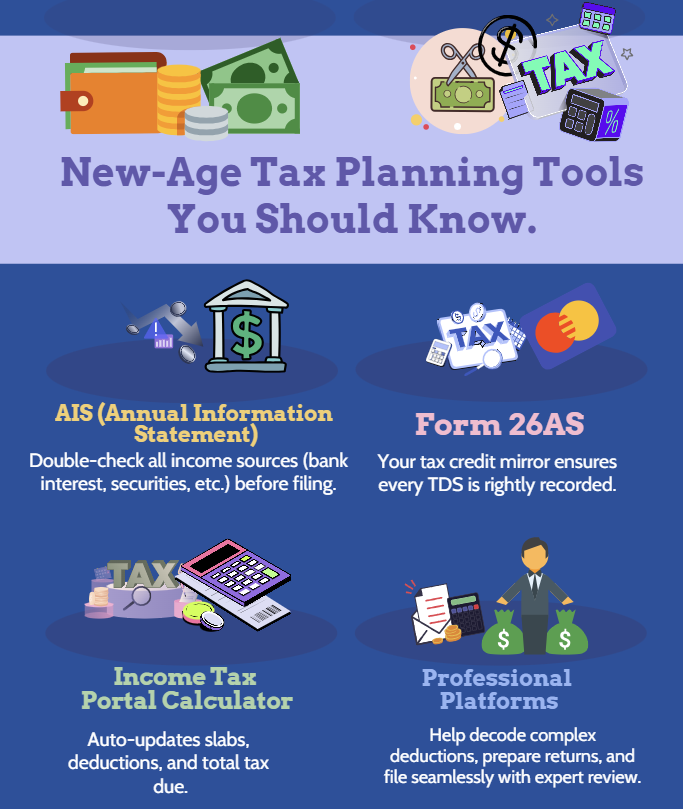
New-Age Tax Planning Tools You Should Know in 2025
Gone are the days of paper files and last-minute calculations. Digital tax tools have made compliance and savings effortless.
Must-have tools for the modern taxpayer:
- AIS (Annual Information Statement): Double-check all income sources (bank interest, securities, etc.) before filing.
- Form 26AS: Your tax credit mirror ensures every TDS is rightly recorded.
- Income Tax Portal Calculator: Auto-updates slabs, deductions, and total tax due.
- Professional Platforms: Help decode complex deductions, prepare returns, and file seamlessly with expert review.
TaxuFiling, in particular, simplifies this for both individuals and small businesses. It not only files your taxes but also flags missed deductions and opportunities, ensuring you save more every single year.
Small Moves, Big Impact: Tax Habits That Pay Off
Tax savings aren’t about one big trick; they’re about consistency and discipline.
Here are the golden habits every taxpayer should develop:
- Keep digital copies of every expense, rent receipt, and investment proof.
- Record all family transactions (loans, salaries, rent) properly.
- Run a mid-year tax check, don’t wait till March to fix things.
- Stay updated with tax circulars and portal updates.
These may sound simple, but they help you stay prepared, avoid scrutiny, and never miss a saving opportunity.
The Secret Sauce: Think Like a CFO, not a Taxpayer
Most people treat taxes like a burden. Smart ones treat it like a strategy.
When you start thinking like a CFO analysing inflows, outflows, and deductions, you realize taxes aren’t something to avoid; they’re something to master. The government gives plenty of legal levers, from family salary deductions to rent benefits, but most people never use them.
In 2025, with digital filing, smart tax dashboards, and guided experts like TaxuFiling, you can finally use these levers intelligently. You don’t need a CA degree, just the right mindset and a reliable platform to guide you.
The Final Word: Stop Letting Taxes Surprise You. Outsmart Them Instead
2025 is the year of the informed taxpayer. You no longer need to drown in paperwork or overpay simply because “no one told you.”
The truth is, tax laws aren’t meant to confuse you; they’re meant to reward those who understand them.
So, the next time someone says, “tax season is stressful,” smile, because you’ll know the real secret: it isn’t about working harder, it’s about working smarter and maybe, about having TaxuFiling by your side to make sure every deduction, every claim, and every opportunity is maximized. Start saving legally with TaxuFiling.