
New Tax Regime for Small Businesses: Compliance Strategy to Avoid Penalties & Maximize Deductions
Are you financially ready for FY 2026, or will compliance penalties reduce your hard-earned profits? The shift to the new tax regime demands early preparation and smart planning.
The Tax Transition Every Business Must Prepare For
FY 2026 marks a major compliance shift for Indian small businesses. The new tax regime 2026 is expected to simplify tax slabs but tighten digital compliance across GST, TDS, payroll, and income tax filings. Businesses that prepare early can avoid penalties, prevent deduction losses, and transition smoothly into the updated tax framework.
The businesses that prepare early will glide through this transition with ease, while others might struggle with mismatched filings, missed deductions, and compliance penalties. This isn’t about fear, it’s about foresight. And that’s exactly what this guide will help you with: a clear roadmap to future-proof your finances and embrace the 2026 tax landscape confidently.
Quick Summary: What Changes in New Tax Regime 2026?
- Simplified tax structure under Section 115BAC
- Reduced exemptions and deductions
- Higher focus on digital compliance
- Stricter GST reconciliation checks
- Increased documentation scrutiny
- Automation-driven reporting requirements
Reimagine Your Books Before the Rules Do
Before 2026 arrives, it’s crucial to take a hard look at how your business records, tracks, and reports transactions. The new regime demands clarity, transparency, and digital accuracy.
Here’s how to prepare your financial foundation:
- Upgrade Your Accounting Software: Move from spreadsheets to GST-compatible, AI-backed software that automates entries and generates compliant invoices.
- Audit Your Books Regularly: Identify and rectify inconsistencies in TDS, GST, and expense claims. A quarterly review will prevent year-end chaos.
- Digitize Expense Tracking: Every rupee matters. Use receipt management tools that link expenses directly to ledgers.
By modernizing your accounting system, you’re not just preparing for the new rules; you’re ensuring your business becomes more agile, data-driven, and stress-free when deadlines approach.
Old Regime vs. New Regime: The Shift Simplified
The confusion around choosing between old and new tax regimes has been ongoing, but 2026 is expected to bring a clearer, more unified approach. For small business owners, understanding this shift early will determine how effectively you plan deductions and investments.
Here’s what to keep in mind
- The old regime favoured businesses that utilized multiple exemptions and deductions.
- The new regime promotes a flat, simplified tax structure with minimal exemptions but lower rates.
- The focus now shifts to clean bookkeeping, consistent reporting, and accurate declarations rather than complicated exemptions.
So, if your business thrives on structured accounting and automated systems, the transition will make your operations smoother than before.
Legal Reference Every Business Must Know
Under Section 115BAC of the Income Tax Act, businesses opting for the new regime may need to forgo certain deductions while benefiting from simplified slab structures. MSMEs must also ensure GST compliance under CGST Act provisions relating to invoice matching and Input Tax Credit (ITC) claims.
Old vs New Tax Regime 2026
| Old Regime | New Regime 2026 | Best For |
| Multiple deductions allowed | Minimal exemptions | Businesses with clean books |
| Complex compliance | Simplified structure | Digitally compliant MSMEs |
| Higher documentation | Streamlined reporting | Startups & structured firms |
Maximize Small Business Deductions & Exemptions While You Can
While the new tax structure aims to simplify things, 2026 will still allow businesses to leverage certain deductions and benefits. The trick lies in identifying what’s still available and optimizing it smartly.
Key deductions to focus on:
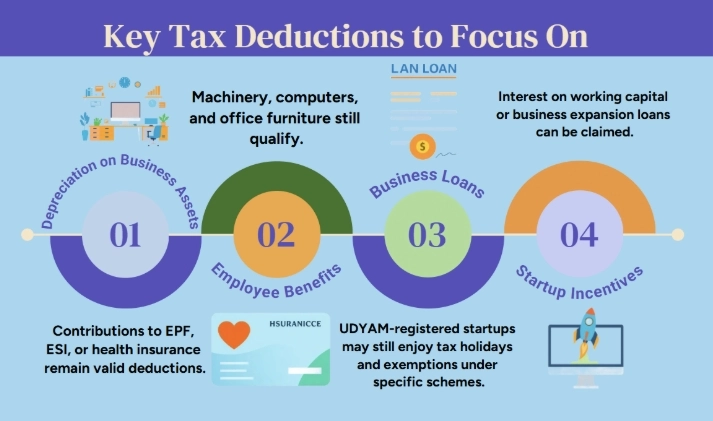
Before the new regime fully reshapes the tax environment, claim every eligible benefit while maintaining clean documentation. It’s not just about saving tax; it’s about building financial discipline that will keep your business resilient.
Key Deductions to Review Before Opting for New Regime
- Depreciation under Section 32
- Presumptive taxation under Section 44AD
- Startup deductions under Section 80-IAC
- GST Input Tax Credit optimization
- Business expense claims with digital documentation
Small Business 2026 Compliance Checklist
- Upgrade to GST-compliant accounting software
- Conduct quarterly GST reconciliation
- Verify TDS deductions
- Digitally archive invoices and expense proofs
- Review eligibility under Section 115BAC
- Maintain compliance calendar for due dates
Automate Your Taxes — Stop Losing Sleep Over Deadlines
Manual tax management is fast becoming obsolete. In 2026, automation will not be an option; it will be a necessity.
Here’s how small businesses can use automation to stay compliant:
- Payroll Integration: Link employee data directly with TDS and GST systems.
- AI-Based Reconciliation: Let smart tools auto-match your sales and purchase data to prevent errors in GST filings.
- Deadline Alerts: Use digital calendars or accounting platforms that notify you of every due date from GST to ROC filings.
Automation is no longer optional. With AI-driven GST reconciliation and real-time compliance tracking, businesses can reduce late filing penalties, prevent ITC mismatches, and ensure timely return submissions. Automation doesn’t just save time; it also prevents stress, late fees, and unwanted notices.
TaxuFiling’s certified tax experts assist MSMEs across India in transitioning smoothly to the new tax regime 2026 through structured planning, compliance setup, and automated filing support.
Confused about preparing for the new tax regime 2026?
Get a consultation with TaxuFiling experts and avoid costly compliance mistakes.
Professional Guidance That Pays Off (Literally)
One of the most underrated strategies for tax success is professional collaboration. The new tax structure introduces nuanced changes in deductions, credits, and reporting, and a certified tax advisor or compliance expert can help you decode them.
Here’s why expert advice matters more than ever:
- Professionals stay updated with real-time tax circulars and rule updates.
- They can customize your tax plan for your business size, industry, and structure.
- They help ensure accuracy in documentation, avoiding any compliance red flags.
Whether you’re a solopreneur, an MSME, or a growing startup, working with the right tax professionals means you don’t just comply, you capitalize.
Expert Insight: Many MSMEs lose tax benefits not because they are ineligible, but because of improper documentation or missed compliance deadlines. A structured tax review prevents unnecessary tax outflow and penalties.
Transition Without the Tension: How TaxuFiling Simplifies the Shift
Change is easier when you have the right partner, and that’s where TaxuFiling steps in. From recalibrating your accounting systems to preparing your compliance calendar for 2026, TaxuFiling ensures your transition to the new tax regime is effortless and efficient.
Here’s how the process works:
- Pre-assessment Review: TaxuFiling experts analyse your current books and filings.
- System Setup: They help you adapt your accounting to match upcoming requirements.
- Automated Alerts & Filing: Never miss a due date; all your filings get auto managed.
- 24/7 Expert Assistance: A dedicated team is available to clarify any doubts along the way.
Instead of scrambling at the last minute, you get a structured, stress-free transition that keeps your business compliant and confident.
Building a Tax-Ready Culture for and Beyond
The new tax regime isn’t just about forms and filings; it’s about reshaping how businesses think about compliance. Start training your teams now. Encourage employees to adopt digital tools, understand expense documentation, and maintain accuracy in payroll submissions.
The more proactive your internal culture is, the less time you’ll spend fixing errors later. Use the current year as your preparation year, the runway before take-off, to ensure your business sails smoothly into 2026 without turbulence.
Received a tax notice or unsure about regime selection?
Contact TaxuFiling about your notice and receive expert guidance within 24 hours.
When Should You Consult a Tax Professional?
- If your turnover exceeds ₹40 lakhs
- If opting under Section 115BAC
- If operating in multiple states under GST
- If claiming high-value depreciation
- If facing GST reconciliation mismatches
FAQ
1. What is changing in the tax system in 2026 for small businesses?
The 2026 tax regime focuses on simplified tax rates, fewer exemptions, and stronger digital compliance across GST, income tax, and payroll systems.
2. Do small businesses need to switch to the new tax regime?
While the structure is being streamlined, most businesses will benefit from the new system if their accounting and reporting are clean and digital.
3. Should I upgrade my accounting software before 2026?
Yes. Modern GST and tax compliant software helps prevent errors, automate filings, and match data across departments.
4. Will tax deductions still exist under the new regime?
Some deductions and business expense claims will still apply, but they will require stronger documentation and accurate reporting.
5. How does automation help in tax compliance?
Automation reduces manual errors, sends deadline alerts, and ensures GST, TDS, and payroll filings stay aligned.
6. Why is professional tax guidance important for 2026?
Tax experts help interpret new rules, prevent compliance mistakes, and structure your finances for maximum efficiency.
7. How can TaxuFiling help during the transition?
TaxuFiling helps set up compliant accounting systems, tracks deadlines, files returns and provides expert support throughout the year.
The Final Word: 2026 Belongs to the Prepared, Not the Panicked
The shift to the new tax regime in 2026 isn’t meant to intimidate; it’s meant to empower. The government’s focus on simplicity, transparency, and digitization is an opportunity for every small business to modernize and operate smarter.
The question is: will you wait for the deadline to dictate your pace, or will you get ahead and make 2026 your most financially efficient year yet?
With the right planning, automation, and professional guidance from TaxuFiling, your business can embrace the new tax era with confidence, clarity, and complete control.
Unsure how the new tax regime 2026 affects your business?
Get a Compliance Readiness Audit from TaxuFiling. Our experts will review your accounting systems, GST filings, and payroll structure to identify potential risks before the transition.