
GST 2.0: What Gets Cheaper, What Gets Costlier — The Only Guide Indians Need for Sep 22, 2025, GST Slab Changes
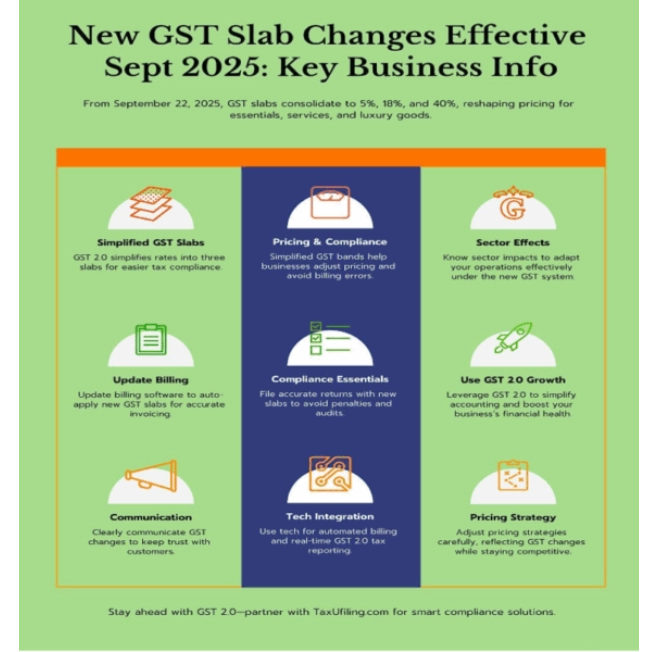
On September 22, 2025, India’s indirect tax landscape is set to shift under a sweeping reform. The 56th GST council meeting, which lasted over 10 hours of discussions, has sanctioned a streamlined GST framework. Gone are the 12% and 28% GST slabs for most goods and services. The new GST slab rates? 5% and 18% for the vast majority, with a 40% GST slab reserved for luxury items.
- What changed: GST 2.0 brings 5%, 18%, 40% slabs
- When it applies: Effective 22 September 2025
- Who it affects: Households, retailers, restaurants, MSMEs
- Why this matters: Your monthly bills, business margins & compliance routines are about to change.
This blog explains exactly what becomes cheaper/costlier and what every Indian must update
Simplifying GST: Three Main Slabs
This is more than just numbers. It’s about how everyday costs shift for shops, restaurants, factories, and insurance bills. GST 2.0 consolidates the previously intricate system into three main slabs, facilitating easier comprehension and implementation for all. GST 2.0 simplifies taxation, but its real impact is on your expenses and business operations.
Here’s a clear breakdown of the new slabs:
- 5% GST — Essentials (groceries, milk, ghee, toiletries, stationery, basic footwear)
Impact: Lower household bills + higher FMCG sales. - 18% GST — Standard items (electronics, appliances, restaurants, online services)
Impact: Businesses must update POS, menus, product listings & billing systems. - 40% GST — Luxury/sin goods (premium cars, superbikes, tobacco, sugary beverages)
Impact: Higher pricing; mandatory billing updates for affected categories.
Pro Tip: With GST slabs now fixed at 5%, 18% and 40%, update your product masters immediately to avoid billing errors and penalty-triggering mismatches.
What GST 2.0 Means for Restaurants, Retailers, and MSMEs
GST 2.0 impacts each business category differently. Understanding these impacts is critical for smooth operations and strategic planning.
Here is a clear industry-wise breakdown:
Restaurants (18% GST)
- Meals are taxed at 18%
- More predictable pricing
- Easier menu planning
- Potential increase in footfall for casual dining.
- Fine dining venues may need to reassess menus and pricing strategies to maintain profitability.
Immediate Action: Update menu cards, billing systems & display boards with the 18% uniform rate.
For instance, a casual café could highlight GST savings on lunch combos to attract more customers, while fine dining restaurants may offer premium services with justified price adjustments.
Retailers & Electronics (18% GST)
- Update POS & online catalogues
- Recalculate MRP + GST-inclusive pricing
- Retag products in-store
- Train staff to respond to customer queries confidently.
Immediate Action: Run a one-time SKU audit to fix mismatched GST rates.
MSMEs
Small and medium enterprises benefit significantly
- Lesser administrative load
- Reduced GST compliance and filing complexity
- Easier cash flow planning
- Simplified accounting
Immediate Action: Reconcile ITC, update GSTR-1 templates & validate vendor invoices.
Case Study: A local electronics shop updated its pricing system for GST 2.0 and reduced billing disputes by 42% in the first month.
Insight: GST 2.0 is not just simpler; it reduces paperwork and helps MSMEs operate with more clarity and fewer errors.
Reviving Your Billing and Pricing for the GST Overhaul
Implementing GST 2.0 isn’t just about knowing the new rates; requires updating systems, pricing, and communication for smooth operations.
Step-By-Step Plan:
- Update invoice formats with new GST slabs
- Update POS, ERP, and accounting software
- Recalculate margins for every product
- Reprint price tags / menus
- Update website/app product prices
- Inform customers & vendors about GST-inclusive pricing
Tip: Businesses that act proactively update POS + product lists can avoid errors, save time, and strengthen customer confidence.
Example: A smartphone retailer updating GST 2.0 settings in billing software saw a 70% drop in return/exchange disputes linked to tax mismatch.
Action Step: Use automated GST-mapping tools to bulk-update thousands of SKUs.
Businesses updating their billing and invoicing systems for GST 2.0 can use this quick support resource for GST-related registrations and compliance
Staying Compliant: Filing Returns and Navigating GST 2.0
Even with simplified slabs, GST 2.0 demands accurate filing. Incorrect filing can lead to fines, interest, or reputational damage.
Key Compliance Actions to Take Immediately
- Reflect new GST slabs in all invoices
- Maintain purchase & sales registers for 6 months
- Reconcile ITC using updated mapping
- Train staff in billing + HSN/SAC updates
- Use expert-reviewed return filing to prevent mismatches
Pro tip: Accurate filing improves your business credibility and score during audits and increases vendor and customer trust.
If you need help updating POS and invoicing to handle the new slabs automatically, check the Monthly GST compliance options.
From Change to Opportunity: Strategies to Protect Your Business and Boost Efficiency
GST 2.0 is not just a challenge; it’s an opportunity to optimize business operations. GST 2.0 can reduce costs, improve operational efficiency, and help businesses scale smarter.
Tips to Keep Operations Smoothly and Without Costly Penalties
- Act early: Don’t wait until the last minute to update systems. Early implementation reduces mistakes, prevents bottlenecks, and ensures smooth customer experiences.
- Communicate transparently with stakeholders: Customers, suppliers, and employees need clarity. Businesses that proactively explain pricing adjustments due to GST gain credibility and maintain loyalty.
- Leverage technology to automate operations: Automated billing, GST-compliant invoicing, and inventory software can save time, reduce errors, and simplify reporting. Cloud-based solutions also allow real-time monitoring of sales and taxes.
- Financial forecasting and cash flow management: Recalculate budgets and cash flow projections considering new GST rates. This helps in planning working capital, managing vendor payments, and adjusting pricing strategies.
- Monitor market response and adapt: Observe how customers respond to new pricing or product categories. Use analytics to adjust marketing campaigns, promotions, or discount strategies to maintain sales momentum.
Professional insight: Turn GST 2.0 into a Growth Opportunity
Businesses that leverage GST 2.0 strategically will save time, reduce disputes, and scale faster.
- MSMEs can reduce accounting complexity, freeing resources for marketing and growth.
- Retailers can improve transparency, building consumer trust.
- Restaurants can optimize menu pricing and offer GST-inclusive promotions to attract more customers.
Real-Life Example
A mid-sized restaurant updated menu pricing + billing under GST 2.0 + communicated savings to customers and saw a 12% increase in lunchtime sales due to:
- Transparent GST-inclusive pricing
- Faster billing
- Clear menu label changes
Going Beyond Compliance: Strategic Advantages of GST 2.0
While many businesses focus solely on compliance, GST 2.0 offers opportunities to enhance operations and drive long-term growth.
- Simpler accounting = faster audits
- Pricing models become clearer and more competitive
- GST transparency improves customer trust
- Analytics tools help track sales & tax patterns
Pro Tip: Treat GST 2.0 as the perfect moment to adopt digital invoicing and real-time sales analytics.
FAQ
1. What is GST 2.0 and when will it be implemented?
GST 2.0 is the revised GST framework approved in the 56th GST Council Meeting, introducing simplified tax slabs (5%, 18%, and 40%). It will be implemented from September 22, 2025.
2. How will GST 2.0 affect restaurant pricing?
Restaurants will follow a standard 18% GST, making pricing predictable. Casual dining may see increased footfall due to transparent billing, while fine dining may adjust menu pricing strategically.
3. Are MSMEs benefiting from the new GST structure?
Yes. MSMEs will experience reduced compliance load, easier filing, simplified accounting, and more predictable cash flow planning.
4. Will electronics and appliances become cheaper under GST 2.0?
Most electronics are now under 18% GST. Retailers may pass on savings through competitive pricing, making several products more affordable.
5. What must businesses update before GST 2.0 rolls out?
They must revise POS systems, update accounting software, recheck product pricing, train staff, and communicate new rates clearly to customers and vendors.
6. How do I update my POS system for GST 2.0?
Use the GST rate-mapping feature → bulk update all SKUs → run 3 test invoices → sync online/offline pricing.
7. Where can businesses get professional support for GST 2.0 compliance?
Businesses can consult TaxuFiling.com for GST registration, return filing, system updates, and complete compliance support.
Conclusion: Your Roadmap Through GST 2.0
GST 2.0 is your chance to simplify billing, correct pricing leaks, modernize invoicing, and gain customer trust. GST 2.0 is a strategic opportunity to streamline operations, accelerate growth, and enhance market credibility.
- The key is preparation: Before the shift, update pricing, train teams, and update systems.
- It’s essential to communicate: Notify all parties involved of rate adjustments and advantages.
- Make use of technology: Analytics platforms, inventory management systems, and billing software facilitate easy adoption.
- Keep an eye on and adjust: Pay attention to how customers behave and adjust your tactics accordingly.
Contact us for expert guidance and end-to-end GST compliance, for a one-stop place covering registration, monthly filings, and wider business-tax support.

Great info.
Glad you found it informative.