AIS, TIS and Form 26AS in 2026: How to Decode, Fix Errors, and Avoid Tax Notices
Filing your income tax return in 2026 is not about putting in your income and submitting it. The Income Tax Department is watching three systems very closely: AIS, TIS and Form 26AS.
Many people think they get tax notices because of mistakes they made when filing. Most notices are sent before filing when your return does not match what the system already knows about you.
If you know how AIS, TIS and Form 26AS work and fix errors on time you can almost avoid getting tax notices delays in refunds and stressful follow-ups.
This blog will explain everything you need to know about AIS, TIS and Form 26AS in plain language.
Why AIS, TIS, and Form 26AS Matter More Than Ever in 2026
India’s tax system has changed. Now it is based on the data it collects, not on what you declare. Banks, employers, mutual funds and other institutions report your transactions to the tax department.
By the time you file your return the tax department already knows about your salary, bank interest, mutual fund investments and other transactions.
All this information goes into AIS, TIS and Form 26AS. If your return does not match these records the system will flag it.
Understanding the official AIS portal, TIS, and Form 26AS is not optional in 2026. It is necessary.
Understanding the Difference Between AIS, TIS, and Form 26AS
Many taxpayers confuse these terms, but each serves a different purpose.
Form 26AS
Form 26AS is your tax credit statement. It mainly shows:
- TDS deducted on your income
- TCS collected on certain transactions
- Advance tax and self-assessment tax paid
- Refunds issued
It answers one key question: How much tax has already been paid in my name?
Annual Information Statement (AIS)
AIS is a detailed transaction report. It includes:
- Salary income
- Bank interest
- Dividend income
- Mutual fund transactions
- Share trades
- Property purchases and sales
- Foreign remittances
- High-value transactions
AIS is comprehensive and sometimes overwhelming, but it gives the full picture.
Taxpayer Information Summary (TIS)
TIS is a summarized and processed version of AIS.
It shows income category-wise totals that the department expects you to report in your return. The tax system relies heavily on TIS while validating your ITR.
If your ITR does not match TIS figures, the chances of a notice increase significantly.
Common AIS and TIS Errors Seen in 2026
As reporting sources increase, errors have also become more common. Some of the most frequent issues include:
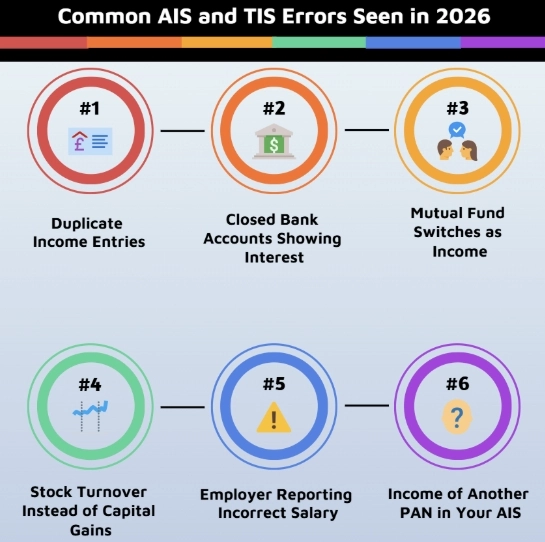
Ignoring these errors is risky. The system assumes AIS and TIS data is correct unless you respond.
How AIS Errors Led to Tax Notices
In 2026, tax notices are largely automated.
Here is how it usually happens:
- AIS shows income higher than what you report
- TIS reflects a different total income
- System flags mismatch
- ITR gets processed with demand or refund blocked
- Notice is issued under relevant section
Many taxpayers panic at this stage, but most of these notices are preventable if errors are corrected early.
How to Check AIS and TIS Properly Before Filing
You should check AIS and how TDS reconciliation works before filing, not after receiving a notice.
Steps to follow:
- Log in to the income tax portal
- Open Annual Information Statement
- Download AIS and TIS
- Match each income entry with your actual records
- Compare totals with Form 26AS
This process should ideally be done at least once every quarter.
How to Respond to Incorrect AIS Entries
One of the biggest upgrades in recent years is the ability to give feedback on AIS entries.
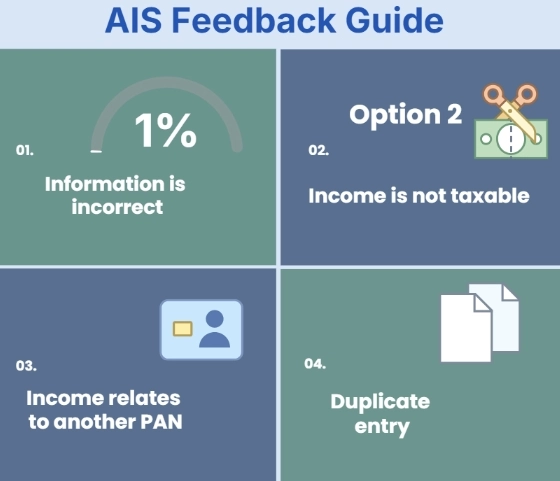
If you spot an error, you can respond by selecting options such as:
- Information is incorrect
- Income is not taxable
- Income relates to another PAN
- Duplicate entry
- Partially correct
Once feedback is submitted, TIS gets updated accordingly. This reduces mismatch risks during filing.
Ignoring incorrect AIS data is one of the most common reasons people receive notices in 2026.
Role of Form 26AS in Refunds and Demands
Even if your income figures are correct, refund delays happen when Form 26AS does not reflect full tax credits.
Common issues include:
- Employer not depositing TDS
- Wrong PAN used by diductor
- Challan details entered incorrectly
- Advance tax not reflected
If tax paid is missing from Form 26AS, the system assumes tax is unpaid and raises demand.
What Most Taxpayers Realize Too Late
Every year, thousands of taxpayers discover AIS and TIS only after receiving a notice.
The common reaction is shock.
“I never earned this much.”
“I already paid my tax.”
“This must be a system mistake.”
But by the time a notice arrives, the system has already assumed the data available to it is correct.
In 2026, the Income Tax Department does not begin with trust — it begins with data. And that data is not collected from you. It is collected about you.
The shift is subtle but powerful.
You are no longer reporting income.
You are reconciling what the system already knows.
That is why proactive review is no longer optional.
Why Freelancers and Businesses Must Be Extra Careful
Freelancers, consultants, and business owners face higher scrutiny because:
- Multiple income sources exist
- TDS is deducted by various clients
- GST turnover may not match income tax data
- Bank credits are closely monitored
AIS often shows gross receipts, while actual taxable income may be lower after expenses. If not explained properly, this difference can trigger notices.
Professional review becomes critical here.
A Simple Real-World Scenario
Consider a salaried employee who also invests in mutual funds and occasionally trades stocks.
During the year:
- Bank reports savings account interest.
- Mutual fund houses report redemptions.
- Stockbrokers report trades.
- Employer files TDS returns.
- Payment platforms report high-value transactions.
Each entity uploads data separately.
Now imagine one mutual fund incorrectly reports a redemption twice.
Or a bank mistakenly tags interest under a wrong category.
Or a broker reports gross turnover instead of taxable gains.
These are not rare cases. They happen regularly.
When AIS captures this data, it reflects exactly what is reported — not necessarily what is correct.
If the taxpayer files ITR without reviewing AIS, the mismatch becomes visible to the system.
The system does not ask whether the third party made a mistake.
It only compares declared income versus reported income.
And the notice is triggered.
How TaxuFiling Simplifies AIS and TIS Compliance
Most taxpayers find AIS confusing and technical. This is where expert assistance makes a real difference.
With TaxuFiling, you get:
- Complete AIS, TIS, and 26AS reconciliation
- Error identification and correction support
- Proper income classification
- Safe mismatch handling before filing
- Notice prevention strategy
- End-to-end compliance management
Instead of reacting to notices, TaxuFiling helps you stay ahead of them. Get Expert help with TaxuFiling.
Best Practices to Stay Notice-Free in 2026
To avoid tax stress, follow these habits consistently:
- Review AIS every quarter
- Match TIS before filing
- Never ignore incorrect entries
- Keep income and tax records organized
- Do not blindly accept prefilled data
- Seek professional review for complex income
Tax compliance in 2026 is not about speed. It is about accuracy.
FAQs
AIS is a detailed statement showing your income and high-value transactions reported to the tax department.
TIS is a summarized version of AIS that the tax department uses to validate your tax return.
Yes. Form 26AS confirms tax paid through TDS, TCS, and advance tax and is crucial for refunds.
You can, but it increases the risk of mismatch notices and refund delays.
You should submit feedback on the AIS portal to correct or explain the error before filing.
TIS is used more during automated processing, but it is derived from AIS data.
The Bottom Line
The bottom line is that AIS, TIS and Form 26AS are the foundation of India’s tax system. If your return aligns with their filing becomes smooth refunds are faster. Notices are rare. If they do not, problems begin even before you realize it.
Understanding these statements and correcting errors early is the tax move you can make in 2026. With the guidance and tools tax compliance does not have to be stressful. Platforms, like TaxuFiling ensure that your data, filings and future remain secure and compliant.